Professional Bio
[short bio] Stuart A. Selber, Professor of English at Penn State and recipient of the university medal for innovative uses of technology in education, studies how literacy and technology intersect and evolve in contemporary settings. He leads digital education initiatives and teaches courses in writing, technology, and artificial intelligence.
Selber has published eight books on digital writing, including widely adopted textbooks in technical communication. His current book project, Gen AI in College Writing Programs, under contract with the University of Chicago Press, critically examines AI as a writing platform. A frequent keynote speaker, Selber has presented at events for Apple and Adobe and has consulted for DuPont, Enstrom, Micron, and other companies. His insights have appeared in The New York Times Magazine and on National Public Radio. He began his career with a clerkship at the United States Department of Agriculture.
[long bio] Stuart A. Selber (PhD, Michigan Tech) is a scholar working at the intersections of technical communication, computers and composition, and human-computer interaction. Combining the most productive aspects of humanist critical traditions and social science methods, Selber studies the applications and implications of digital technologies for writing and communication. His work focuses especially on the social dimensions of literacy practices and on heuristics that conceptualize instructional and institutional contexts.
Selber is a past president and fellow of the Association of Teachers of Technical Writing (ATTW), a past president of the Council for Programs in Technical and Scientific Communication (CPTSC), a past chair of the Conference on College Composition and Communication (CCCC) Committee on Technical Communication, and a past chair of the Association for Computing Machinery (ACM) Special Interest Group on Design of Communication (SIGDOC) Conference. He also played a central role in establishing both the CCCC Outstanding Dissertation Award in Technical Communication and the ATTW Book Series in Technical and Professional Communication.
At Penn State, Selber is as a professor in the Department of English and serves as director of digital education and director of the Penn State Digital English Studio. In these interrelated capacities, he designs sociotechnical infrastructures that support the digital endeavors of both individuals and academic programs. In addition, he oversees instructors earning a certificate in teaching with technology, advises students minoring in technical writing, and offers a senior seminar for students concentrating in professional and media writing.
Selber also serves as director of the Program in Writing and Rhetoric, which enrolls more than 18,000 students annually in two required general education courses: first-year writing and writing in the disciplines, the latter of which includes business and technical writing. These courses are offered in both residential and online formats and integrate a multiliteracies framework that systematically addresses writing technologies.
His efforts in and beyond the classroom, across both teaching and service, have been recognized with prominent awards:
- In 2023, the Consortium of Doctoral Programs in Rhetoric and Composition honored the Penn State Digital English Studio with The Janice M. Lauer Institutional Achievement Award in Rhetoric and Composition Doctoral Studies. The award was for “an institutional innovation that enhances doctoral education and student development in writing studies through its excellence and impact.”
- In 2021, the Society for Technical Communication (STC) presented Selber with the Jay R. Gould Award for Excellence in Teaching Technical Communication. The award was for “the ability to carve out an intellectual space about pedagogy, introduce novel ideas at every level of the curriculum, and build frameworks that cross over from academic to organizational and industry settings.”
- In 2021, Penn State recognized the contributions of his pedagogical work with the Teaching and Learning with Technology Impact Award. This system-wide award celebrates “the accomplishments of Penn State faculty members whose work transforms education through the innovative use of technology.”
- In 2018, he received the Ronald S. Blicq Award for Distinction in Technical Communication Education from the Institute of Electrical and Electronics Engineers (IEEE) Professional Communication Society (PCS). The Blicq Award honors “innovative educators who have influenced the ways that technical communication is taught in pre-college settings, in undergraduate and graduate university degree programs, and in professional life through workshops and seminars.”
- In 2013, the large-scale program that Selber directed from 2006-2012 received a CCCC Writing Program Certificate of Excellence. To win this award, a program must demonstrate best practices in writing instruction, offer exemplary professional development, employ effective assessment practices, address diversity issues, treat contingent faculty professionally, and more.
- In 2011, he received the Distinguished Service Award from the Council for Programs in Technical and Scientific Communication (CPTSC). The award was for “many significant contributions to the field—in scholarship, curriculum and program development, assessment, and working to increase ties between academia and industry—as well as your contributions to CPTSC, including your broad generosity in sharing your work and insights and always moving forward to improve the field.”
- In 1999, he received the Recognition of Service Award from the Association for Computing Machinery (ACM) for outstanding contributions to the Special Interest Group on Design of Communication (SIGDOC).
Beyond the Department of English, Selber serves as a faculty fellow in the Teaching and Learning with Technology unit and as an affiliate professor in the College of Information Sciences and Technology and the Center for Socially Responsible Artificial Intelligence. He previously held a faculty fellowship in the Center for Humanities and Information (2016). Earlier in his tenure at Penn State, he chaired the 20th Penn State Conference on Rhetoric and Composition (2007), which centered on rhetorics and technologies. Eleven abstracts from the conference were developed into an edited volume in the Studies in Rhetoric and Communication series published by the University of South Carolina Press.
Selber has also been honored with several national research awards:
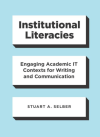
- In 2022, his single-authored book Institutional Literacies: Engaging Academic IT Contexts for Writing and Communication (University of Chicago Press) won the Distinguished Book Award from Computers and Composition.
- In 2018, he received the Ken Rainey Award for Distinguished Research from the Society for Technical Communication (STC). The award was for “a lifetime of quality research that has made significant contributions to the field of technical communication.”
- In 2014, his co-edited book Solving Problems in Technical Communication (University of Chicago Press) won the award for Best Original Collection of Essays in Technical or Scientific Communication from the Conference on College Composition and Communication (CCCC).
- In 2011, his article “A Rhetoric of Electronic Instruction Sets” won the Nell Ann Pickett Award for Best Article in Technical Communication Quarterly.
- In 2005, his single-authored book Multiliteracies for a Digital Age (Southern Illinois University Press) won the Distinguished Book Award from Computers and Composition.
- In 2005, Multiliteracies for a Digital Age also won the award for Best Book in Technical or Scientific Communication from the National Council of Teachers of English (NCTE).
- In 2005, his co-edited book Central Works in Technical Communication (Oxford University Press) won the award for Best Collection of Essays in Technical or Scientific Communication from NCTE.
- In 1998, his edited book Computers and Technical Communication: Pedagogical and Programmatic Perspectives (Bloomsbury Publishing, acquired imprint of Ablex/ATTW) won the award for Best Collection of Essays in Technical or Scientific Communication from NCTE.
- In 1997, his co-authored article “Policing Ourselves: Defining the Boundaries of Appropriate Discussion in Online Forums” won the Ellen Nold Award for Best Article in Computers and Composition.
- In 1995, his article “Beyond Skill Building: Challenges Facing Technical Communication Teachers in the Computer Age” won the award for Best Article on Methods of Teaching Technical or Scientific Communication from NCTE.
Selber has delivered lectures and workshops at Adobe; Apple Computer (Cupertino, CA); Bucknell University; DePaul University; Duquesne University; Fordham Graduate School; Iowa State University; James Madison University; Miami University; Michigan State University; North Carolina State University; Penn State College of Medicine (Hershey, PA); Purdue University; Texas A&M University; Universidad del Desarrollo (Chile); University of Arkansas at Little Rock; University of Denver; University of Louisville; University of Maryland; University of New Hampshire; University of Wisconsin at Milwaukee; University of Wyoming; Virginia Tech; and numerous other venues.
In non-academic settings, Selber has worked with a range of corporations, including the DuPont Company (Wilmington, DE), Lotus Development Corporation and Beyond Incorporated (Cambridge, MA), Enstrom Helicopter Corporation (Menominee, MI), Micron Technology and West One Bancorp (Boise, ID), Transition Systems (Boston, MA), and Editorial Services of New England (Cambridge, MA). He also completed a clerkship with the United States Department of Agriculture (Washington, DC). His roles included documenting toxicology, financial, email, and hospital administration software; developing proposals and job descriptions; and building document databases.